
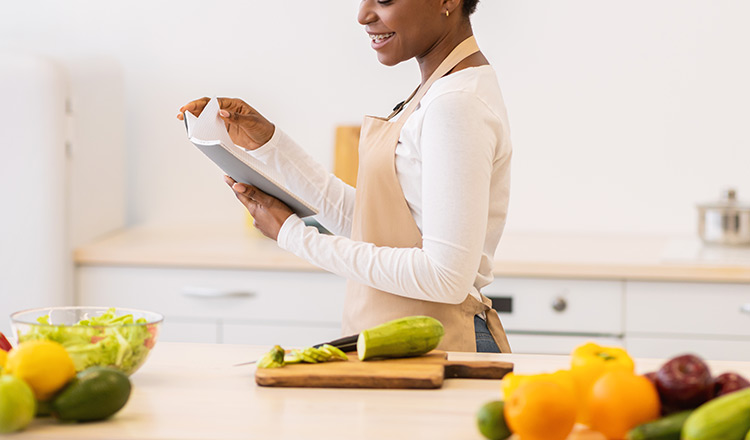
Recipes, full of data, are simple enough on the surface. What are you making, what are the ingredients, and how is it prepared? When you learn to read a recipe like a chef, however, you’ll realize that in a few extra moments, you can save yourself time, do more efficient prep, and anticipate and questions or issues that may arise while you cook.
In addition to the recipe name and headnotes (which can offer valuable advice), there are three primary components to a recipe: the yield, the ingredient list, and the method. When preparing to make a new recipe, first read through the entire thing. Then take another minute and give some extra attention to each component, starting with the yield.
The Yield
The yield can either refer to the number of servings a recipe makes or an overall quantity of a finished dish. When it comes to a number of servings, that quantity is entirely subjective—left to the opinion of the recipe writer. Though typically a fine estimate, there are reasons to question whether that yield will meet your needs.
Yields are sometimes based on nutritional information. In order to reduce the calories, carbs, etc. in each serving, publications may increase the number of servings to reduce the serving size. A recipe that feeds 4 comfortably may show that it serves 6 or 7 so that each serving is more in line with their nutritional standards.
Only you know how much you or your family will eat, so analyze the ingredients. If a recipe serves 8 but only calls for two chicken breasts, your experience might tell you that two chicken breasts won’t serve the 8 people you’re cooking for. Use these clues to determine whether you want to double the recipe or make another dish to serve alongside it.
When recipes give a quantity rather than a number of servings, divide that number by the amount of people you plan to serve. Use standard sized cans, jars, or plastic containers as a point of reference to determine if that amount will be sufficient per person and adjust as needed.
The Ingredient List
In addition to taking time to review the ingredients and make any adjustments to suit special diets, flavor preferences, or the contents of your pantry, the ingredient list offers clues for efficient prep. In a well written recipe, the ingredients should be listed in the order they are used. Using the method as a guide, determine which of the ingredients are added to the dish at the same time. These ingredients can be prepped in one bowl since they are all going in together. As an example, measure the flour, baking soda, salt, and any other dry ingredient into one bowl when making cookies or cakes. Mise en place is a means of organization, but it sure can leave a lot of dirty dishes behind, so try to consolidate when you can.
Also consider the way the ingredients are prepared. If a salsa or tapenade recipe calls for tons of mincing ingredients into teeny tiny pieces before being mixed together, could it make more sense to toss the ingredients into a food processor and pulse until mixed—and minced? This is especially helpful when making elaborate, multi-part recipes. Before you mince a clove of garlic for the marinade, check to see if garlic is called for in other sub-recipes. Don’t mince garlic twice! Prepare all of one ingredient at the same time.
You will also want to consider the order that you measure the ingredients. For example, if you need 1 tsp of honey and 1 tsp of salt, the honey would most likely be used first and therefore listed first in the ingredients. However, if you measure honey first, you will then need to wash and dry your measuring spoon before you can measure the salt. To save a little time and effort, measure the salt first so you have a clean spoon to measure the honey.
Also remember that you can use one large measuring cup to measure as many liquids as can fit. If a cake calls for 1 cup of buttermilk and 1/2 cup vegetable oil, you can measure them into the same 2 cup measuring cup. First fill with the cup of buttermilk and then add the oil until it reaches 1 1/2 cups (the total volume of the combined liquids). If it’s big enough, you can even add extracts and crack your eggs right into this mixture and whisk it all together.
The Method
The method includes all the steps needed to produce the finished dish and might include any chef’s notes or variations at the end. Review each step and make sure you don’t have any questions. If you do, now is the time to search for videos or other answers. If there are any steps that are unclear, take a moment to think back on other recipes—or do an internet search for similar dishes—and remember how you’ve done something similar before. There are very few truly unique cooking techniques, so your experience is a valuable resource for filling in missing pieces.
You will also want to make sure all the ingredients are listed in the method and that none are missing. When this happens, a great place to look for help is the recipe comment section. Others might share how they handled it, and if not, do some research and trust your gut.
The method is also where we might determine which, if any, of the steps can be done ahead of time. Look for key phrases like, “rest overnight,” “set aside until needed,” or “cool fully.” This means that part can be done early, and you can pick up with the next step when you’re ready. Of course, it may not always be this obvious, but if you analyze the next steps, you may find clues to indicate good stopping points.
Just like with the ingredient list, you may find opportunities to maximize efficiency in the method. Will you be preparing a vinaigrette and pouring it over a salad later? Why not build the vinaigrette in the serving bowl and then build the salad over it. Drop the least tender ingredients into the bowl with the dressing first: tomatoes, cucumbers, etc., then top with any delicate greens or herbs. Keep an eye on how many pans and baking pans are being used and decide if they are all really necessary.
Use this trained eye to consider the order you prepare ingredients, as well. For the same salad, the recipe may call for you to sauté chicken first to set aside while you build the salad. This is fine, but you might prefer to prep all of your veggies and other ready-to-eat ingredients first and then tackle the chicken. That way, you don’t have to worry about cross-contamination and can clean up the dirty chicken cutting board and other tools while you’re wrapping up.